


One housekeeping note before we start. On Friday morning you got three emails from us inside of five minutes: “Narrow at the Highs,” “Pulled Back, Moving Forward,” and “Ninety-Nine And Sixty-Five,” each of them a two-line stub pointing you to Pharos. Those were not new pieces. We have been building code that moves every piece of our written research into Pharos automatically, so it is there the moment it publishes instead of us loading each one by hand, and on Friday it grabbed the wrong end of the pipe: it took the member-gated stubs from our website and pushed them back out to Substack as fresh posts. We caught it, shut it off, and deleted the posts within the hour, but we apologize for the bombardment of your inbox. Nothing else changed: the originals are exactly where they were, nobody was charged, nobody was moved off a list. Our apologies.
Treasury doubled its long-end buybacks on Wednesday. The 30-year took the gift for about a session, gave the whole rally back, and traded back up through 5.2 percent by Thursday’s close; Bessent’s answer was that he is prepared to go bigger. Watch the thing that did not get back up. The dollar index closed at 98.7, below 99 for the first time since May, lower against every G10 currency, while gold logged a third straight weekly gain and bitcoin cleared $75,000 on what was reported as the largest short liquidation on record.
Read together with the Fed’s minutes, which showed three hawks and reserves “ample”: the Fed added $31B over 13 weeks, the Treasury account drained $125B. Net liquidity −$91B. The drain is fiscal now, not monetary. None of the six lenses moved: fiscal supply, duration mismatch, Fed balance sheet posture, plumbing capacity, inflation expectations, growth-driven path expectations. A doubled buyback is a louder backstop, not a regime change. We laid the framework out in May, and the backstop in July. The data still points the same way.
The August 13 auction showed us that the long end maintains its own vote, and persistent long-term yields driven by heavy supply and rising term premiums can prevent short-term policy rate cuts from easing broader financial conditions. Take the last twelve months and pull the ten-year apart. The nominal yield rose 39 basis points. Term premium, the piece that compensates a buyer purely for accepting duration, rose 35 of them. The ten-year breakeven fell 10. Bessent has been pretty clear about his intentions with respect to the long end, and that was “I’m going to get involved and stay involved.” Something something free markets.
When a sovereign starts managing its own long end, the pressure does not vanish, it moves to the currency. Yields that attract capital pull a currency up. Yields that rise while the currency falls are compensation, and this week the market treated 5.2 percent as compensation. That pair, the long bond and the dollar, is the tell, and it is the first chart in the book.
One hundred charts, twelve pillars. Almost every one of them is a relationship, a spread, or a transformation, because a data series on its own tells you what happened, and only the relationships give you the context you actually need. None of it is a forecast. It is a map of where the weight sits right now, and what would have to change for the call to change. This month the weight sits in three places: a long end that is being managed, a dollar that is taking the pressure, and a real economy that is frozen but not shedding.
Birthday week wraps Sunday. A month ago, I posted that $500 was the floor for the complete Lighthouse platform with Pharos included. That standard holds. Early paid subscribers remain grandfathered into Pharos at their locked rate as promised. For my 33rd birthday, I am unbundling the tiers for one week so new readers can join at the level that fits them best.
Complete Bundle ($500/yr, moves to $750/yr on August 24): everything in Research, plus the Pharos Terminal, the 60-indicator PDF deck, real-time Crosscurrents trade logs, and active position weights. Lock it here: https://research.lighthousemacro.com/Subscribe
Complete Bundle · $500/yr, goes up on August 24
On Sunday, August 23 at 11:59 p.m. Eastern, this window closes.
Overview
Six charts that carry the edition.
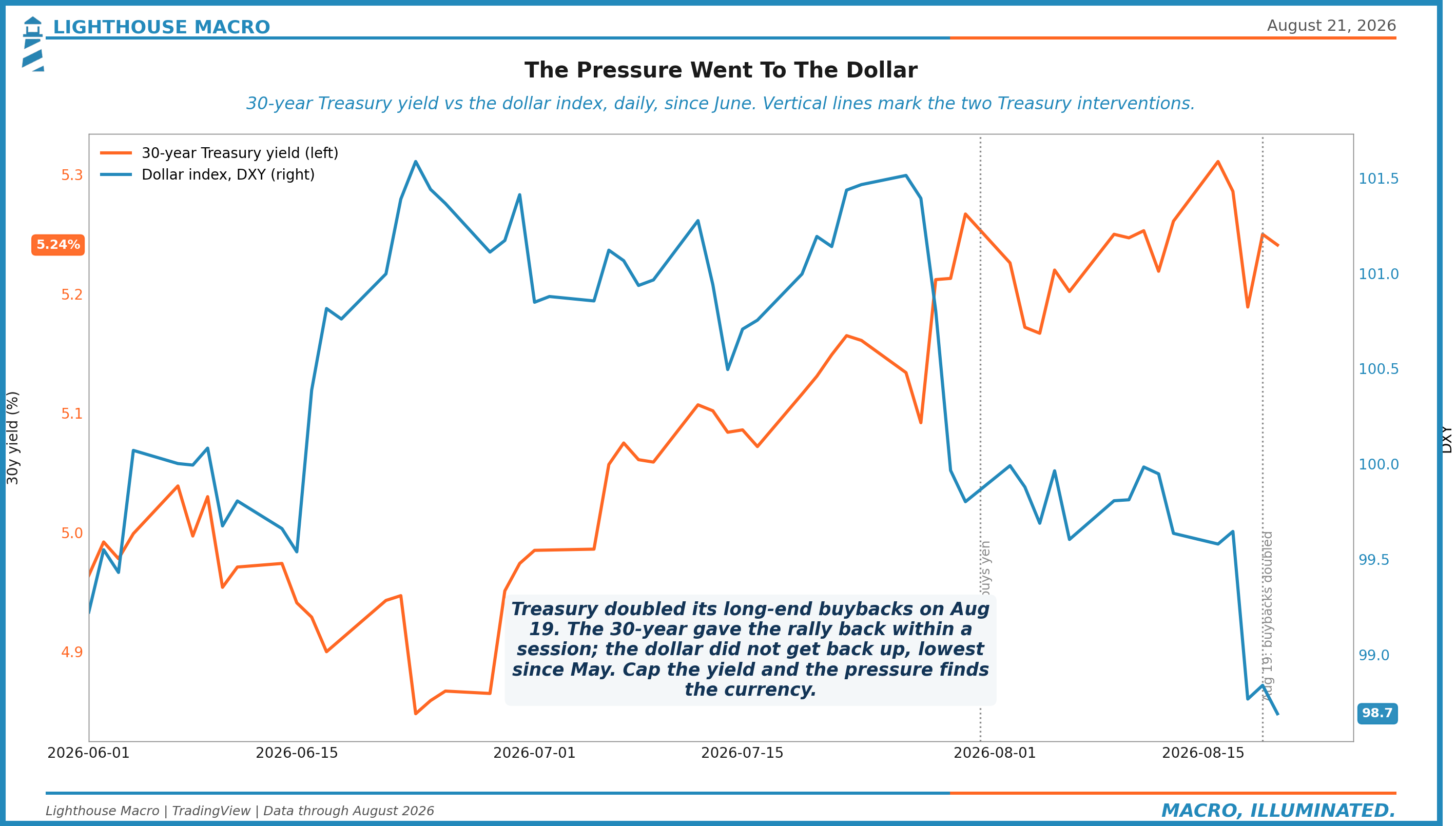
Figure 1. Treasury doubled its long-end buybacks on August 19; the 30-year gave the rally back inside a session and sits at 5.24 percent, while the dollar index did not get back up and closed at 98.7, its lowest since May.
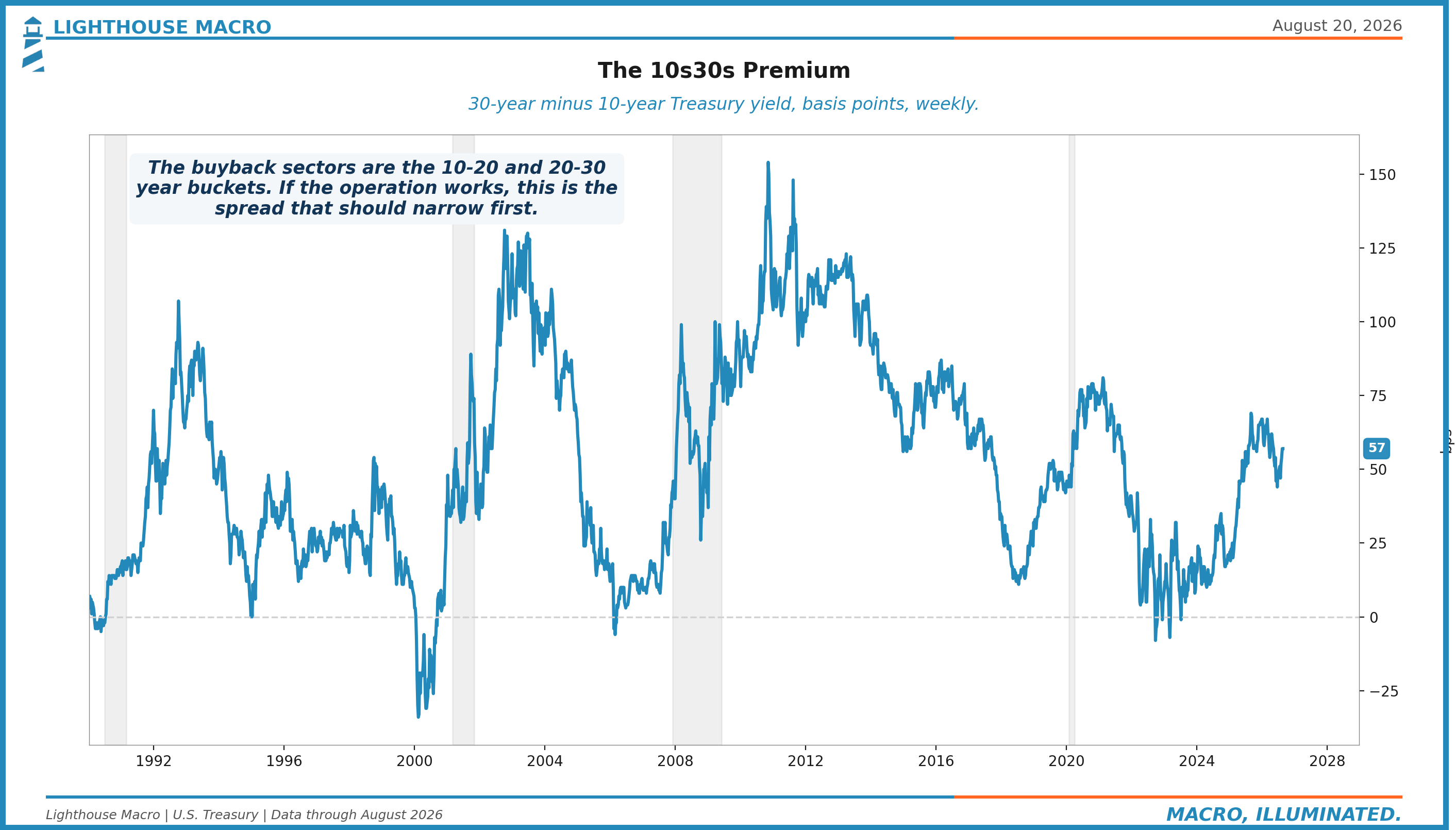
Figure 2. The buyback sectors are the 10-to-20 and 20-to-30 year buckets, so this is the spread that should narrow first if the operation works, and at 57bps it sits within a few basis points of where it was before the announcement.
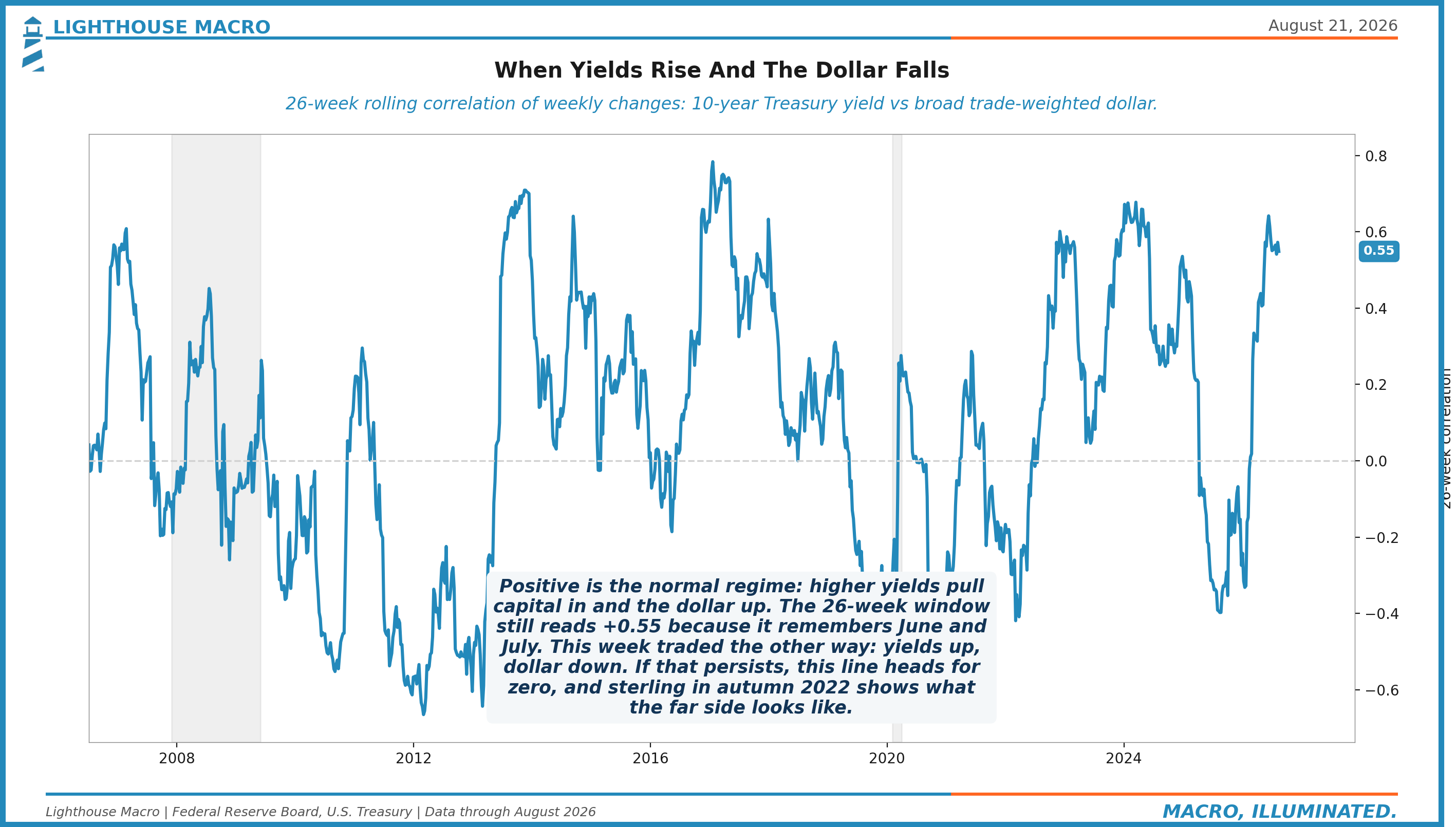
Figure 3. Positive is the normal regime, higher yields pulling capital and the dollar in; the 26-week correlation still reads +0.55 because it remembers June and July, and this week traded the other way.
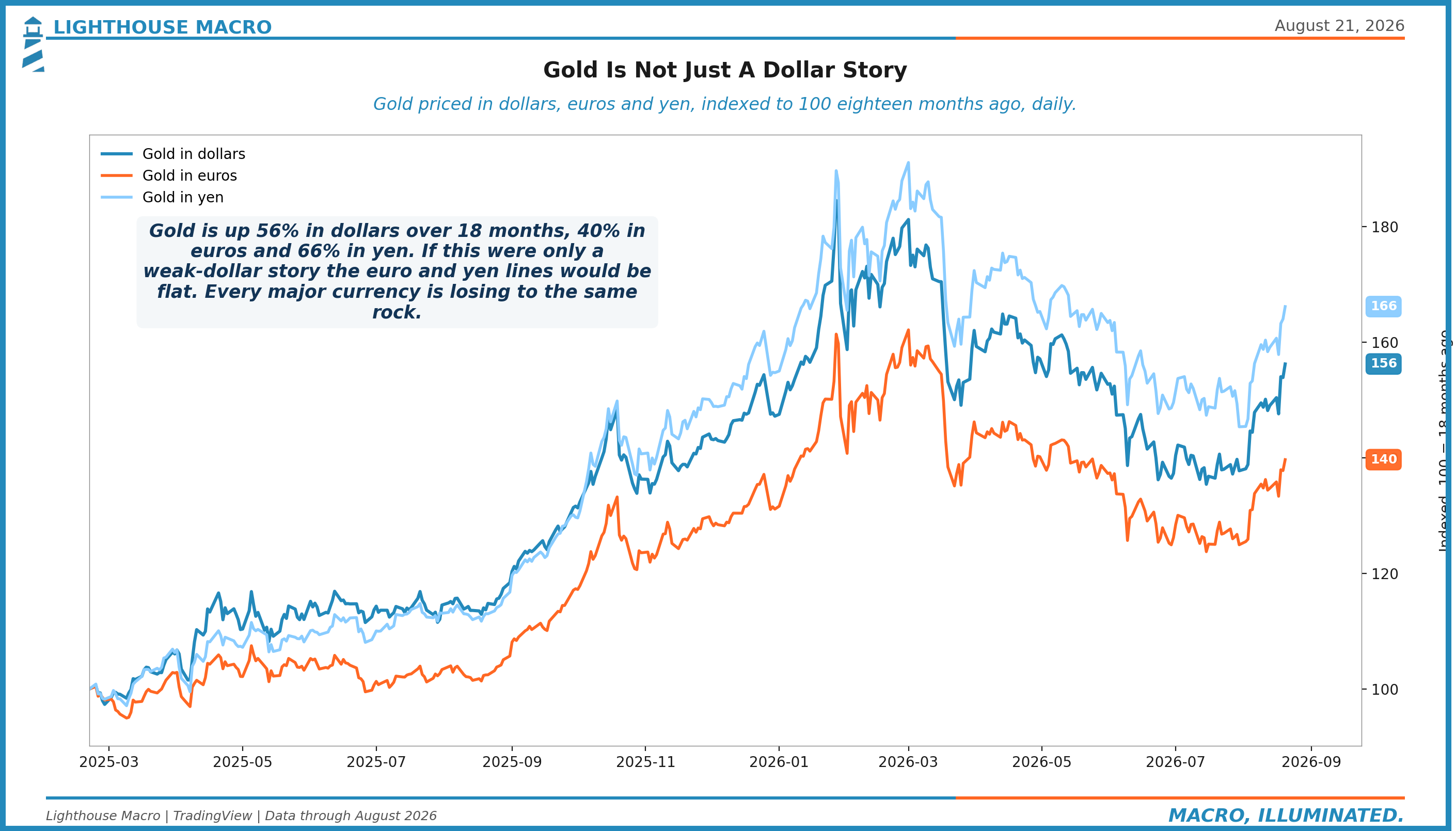
Figure 4. Gold is up 56 percent in dollars over eighteen months, 40 percent in euros and 66 percent in yen, which is the shape of every major currency losing to the same rock rather than a weak-dollar story.
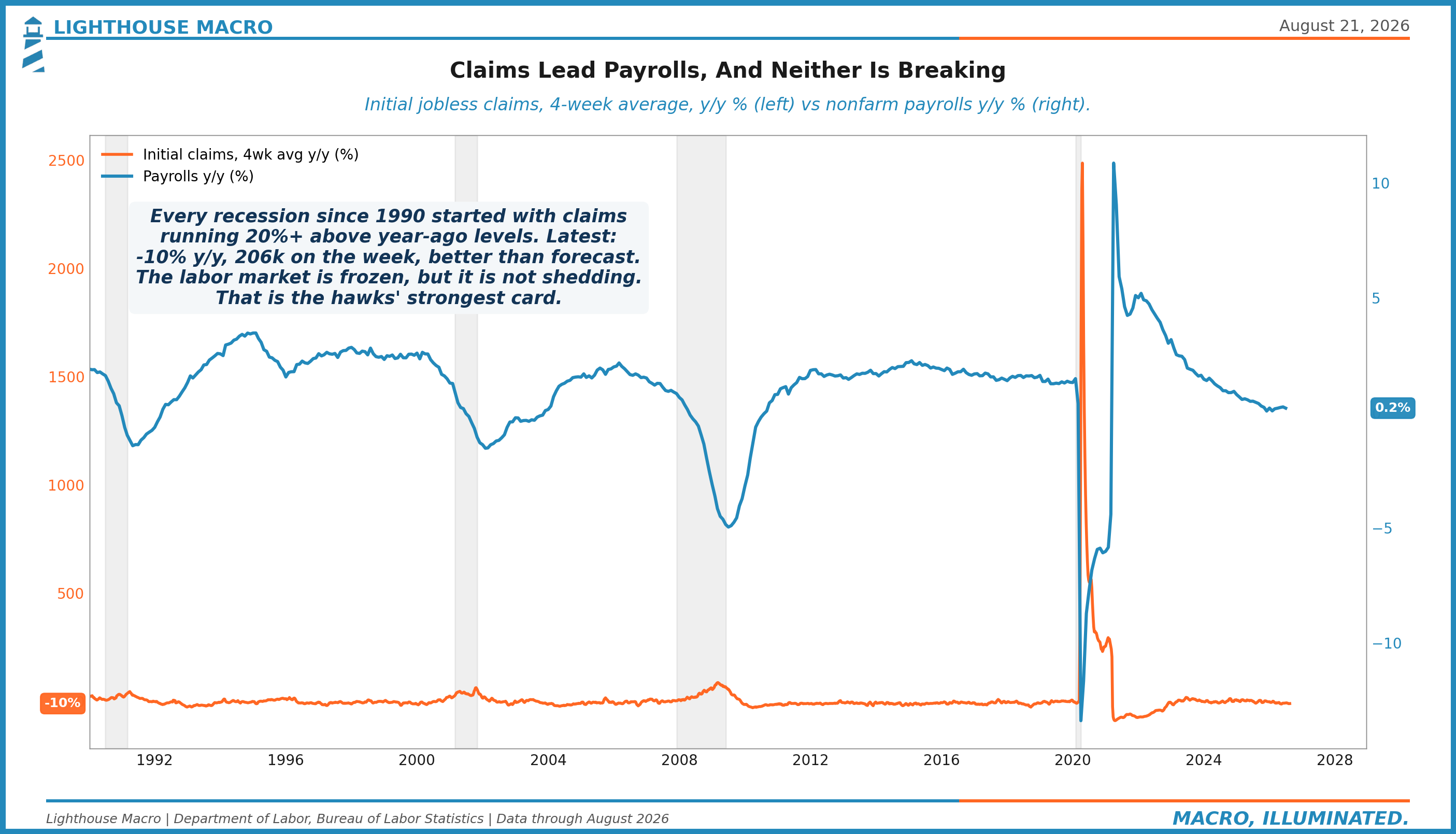
Figure 5. Every recession since 1990 started with initial claims running 20 percent or more above year-ago levels; the four-week average is 204k, about 10 percent below a year ago, and 206k on the week beat the forecast.
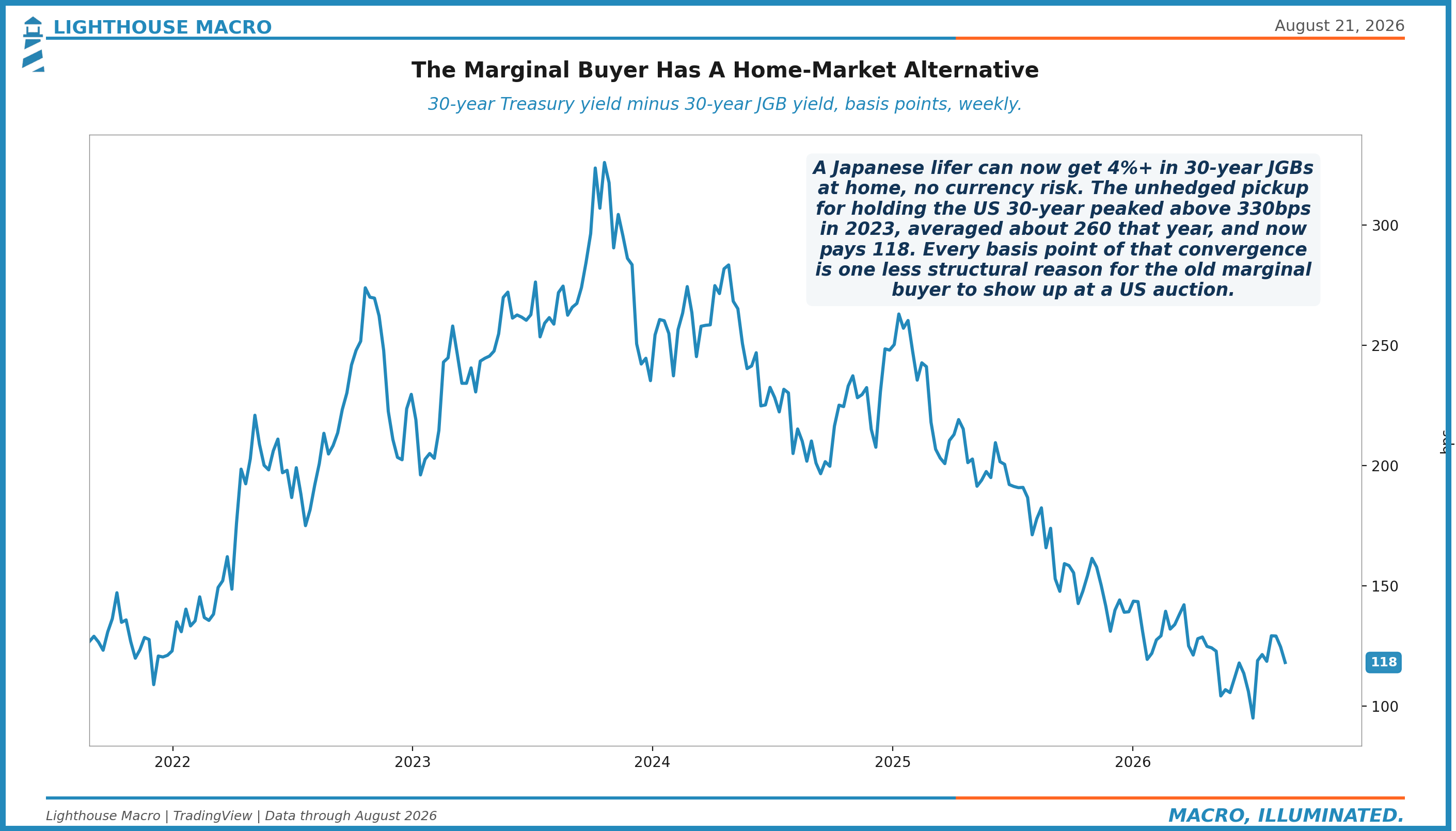
Figure 6. A Japanese life insurer can get 4 percent or better in 30-year JGBs at home now; the unhedged pickup for holding the US 30-year instead peaked above 330bps in 2023 and pays 118 today, one less structural reason for the old marginal buyer to show up at a US auction.
